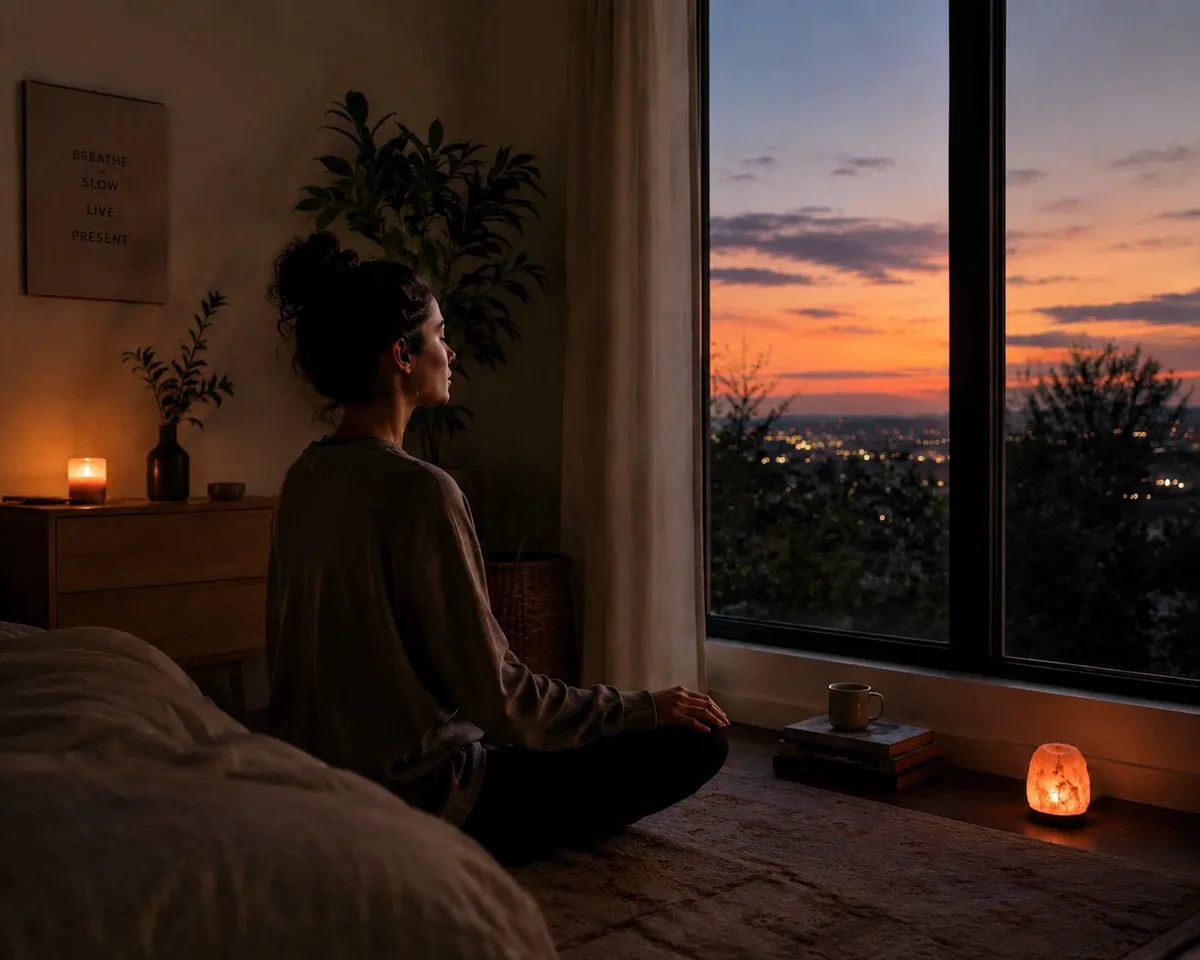
If you’ve ever lain in bed feeling exhausted yet unable to fall asleep, you already understand the real issue isn’t a tired body — it’s a nervous system that won’t quiet down.
That’s precisely where yoga comes in.A 2025 network meta-analysis of insomnia treatments found that compared to everyday lifestyle changes, yoga was linked to a meaningful increase in total sleep time — often adding an extra hour or more each night (2025 network meta-analysis).
The reason is straightforward. Most of us spend the day in a state of constant alertness — dealing with deadlines, screens, traffic, and endless notifications.Slow, gentle yoga shifts this state to rest-and-digest, helping lower cortisol levels and allowing melatonin to do its job.You’re not forcing sleep; you’re clearing the barriers that prevent it.
Why poses alone don’t fix sleep
Here’s what most guides miss: they give you twenty poses and leave you to figure out the rest.
But doing a random stretch at 9 p.m.does little.What really makes a difference is a short, repeatable sequence done at the same time every night — a clear signal to your brain that the day is ending.
A 10-minute wind-down sequence for better sleep
Do this about 30 minutes before bed, with lights dimmed and your phone in another room:
Sukhasana with slow breathing (2 minutes): Sit cross-legged and lengthen each exhale.
Long, slow breaths are what trigger the calming response.
Seated forward fold, Paschimottanasana (2 minutes): Releases tension in the lower back and quiets a racing mind.
Legs-up-the-wall, Viparita Karani (5 minutes): This is one of the most underrated sleep poses.
It reduces tension in tired legs and slows the heart rate.
Reclined butterfly, Supta Baddha Konasana (3 minutes): Opens the hips, where a lot of stored stress can build up.
Finish by lying still for a few minutes of Yoga Nidra — guided “yogic sleep” — which teaches your body to let go of tension on command.
The Ayurvedic edge
In Ayurveda, good sleep isn’t a switch you flip at bedtime; it’s a result of how you spend your evening.
A consistent routine — warm lighting, an earlier and lighter dinner, no screens — supports your natural rhythm instead of disrupting it.For many people, therapies like Shirodhara, which involves a steady stream of warm oil over the forehead, take this further by calming an overactive mind in ways that poses alone can’t Shirodhara and Panchakarma therapies.
When yoga isn’t enough
If your sleep has been broken for weeks, the cause is often deeper — chronic stress, gut imbalance, or a disrupted cortisol rhythm.
While yoga helps, ongoing insomnia needs a proper assessment.Our physician-led Sleep Restoration program addresses the root cause by combining clinical evaluation with Ayurvedic therapy and a practice tailored to you.If your sleepless nights are linked to work stress — a common issue among professionals in places like Bangalore — our Stress & Anxiety program may be a better starting point.
Frequently Asked Questions