
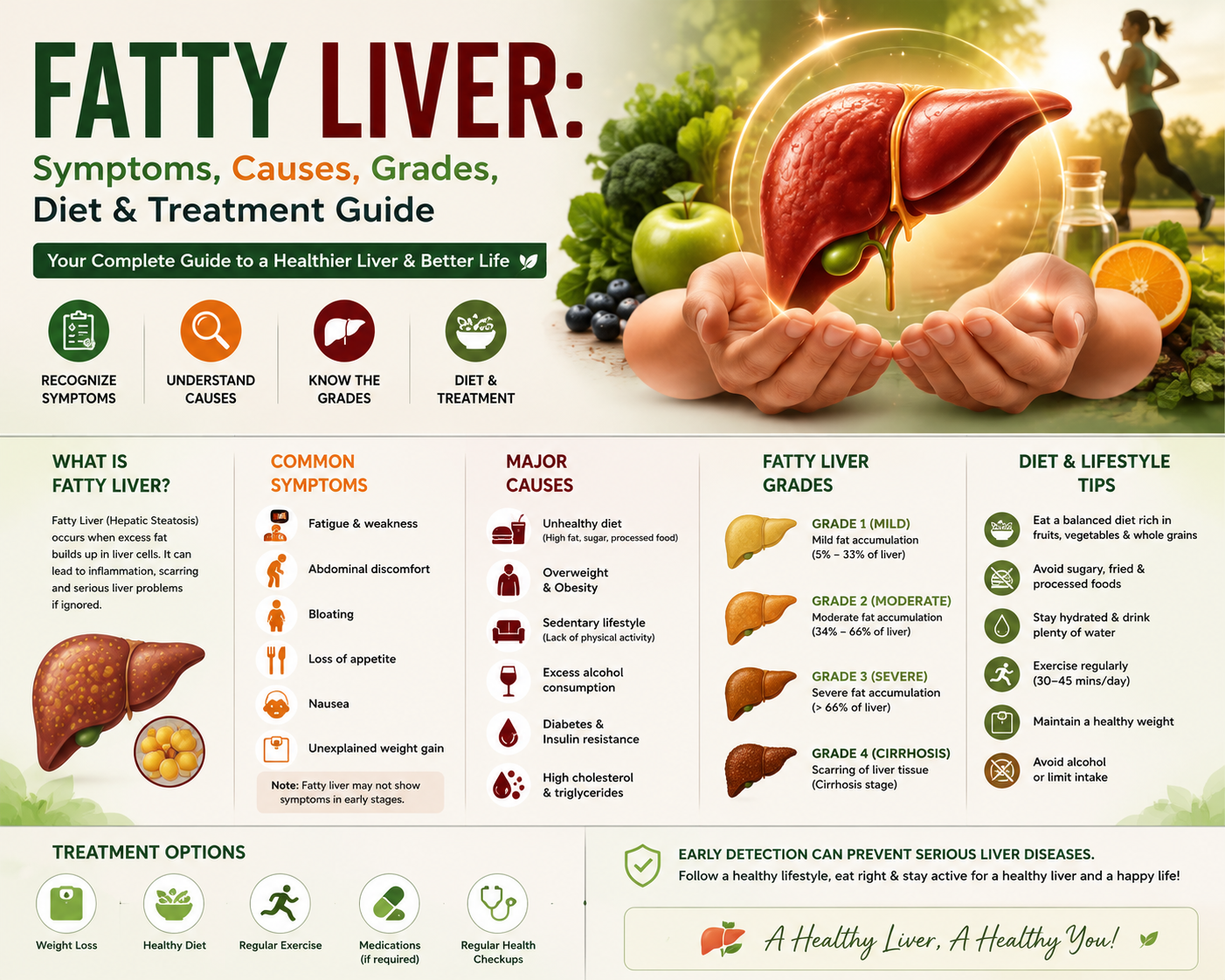
If you've just seen the words "fatty liver" on a report, or you're trying to understand a family member's diagnosis, you're not alone—fatty liver has quietly become one of the most common liver conditions in the world, often discovered by accident during a routine scan.
This guide covers it all in one place: what fatty liver is, how to spot the symptoms, how it's graded, what to eat, when to see a doctor, and the questions people search for most. Wherever you need more depth on a specific grade, we've linked out to a dedicated guide.
What is Fatty Liver Disease?
Fatty liver, medically known as hepatic steatosis, happens when excess fat builds up inside liver cells. A healthy liver naturally contains a small amount of fat, but once that fat exceeds about 5% of the liver's weight, doctors classify it as fatty liver disease.
There are two broad types:
- Non-alcoholic fatty liver disease (NAFLD), now increasingly called MASLD — linked to weight, insulin resistance, and diet rather than alcohol.
- Alcoholic fatty liver disease (AFLD) — caused by long-term heavy alcohol consumption.
It's typically classified into three grades, from mild (Grade 1) to severe (Grade 3), and often develops silently for years with no obvious symptoms — which is exactly why understanding the early signs matters so much.
Fatty Liver Disease Symptoms
One of the trickiest things about fatty liver disease symptoms is how easy they are to mistake for everyday tiredness or stress. In its earliest stage, fatty liver often produces no symptoms at all. As it progresses, certain fatty liver symptoms tend to show up more consistently:
- Persistent fatigue or low energy
- A dull ache or heaviness in the upper right abdomen
- Mild bloating or a sense of fullness after eating
- Reduced appetite
- Occasional nausea
- Unexplained weight changes
- Elevated liver enzymes or cholesterol on routine blood work
In more advanced stages, symptoms can turn more serious — jaundice, swelling in the abdomen or legs, visibly prominent abdominal blood vessels, and confusion or difficulty concentrating. These later-stage signs point to significant liver stress and should never be self-managed.
Because fatty liver is so often silent early on, routine screening — especially with risk factors like obesity, diabetes, or high cholesterol — is one of the best ways to catch it before symptoms appear at all.
Fatty Liver Symptoms in Males
Fatty liver disease is generally more common in men than women, particularly before middle age. Fatty liver symptoms in males overlap closely with the general list, but a few patterns show up more often:
- Abdominal discomfort, particularly on the upper right side
- Metabolic symptoms like high cholesterol or triglycerides alongside the diagnosis
- A stronger association with visceral (abdominal) fat and central obesity
- Higher risk of progression to more advanced disease, including cirrhosis, compared to pre-menopausal women
Men are also somewhat more likely to be diagnosed later, since routine check-ups tend to be less frequent — meaning symptoms often surface only once the condition has already progressed.
Fatty Liver Symptoms in Females
The overall symptom picture is largely similar between men and women, but a few differences stand out. Premenopausal women have some natural protection against fatty liver disease, largely due to estrogen—but that protection fades after menopause, and risk rises sharply from there.
Some patterns specific to women include:
- Menstrual irregularities or unusually heavy periods, sometimes linked to hormonal imbalances tied to liver stress
- Added fatigue or hormonal fluctuations alongside standard symptoms
- A sharp rise in risk after menopause
- Some research suggesting women are diagnosed with more advanced fibrosis by the time fatty liver disease is caught, compared to men
If you're past menopause and noticing persistent fatigue, abdominal discomfort, or unexplained changes in blood work, it's worth specifically asking your doctor about a liver health check—this risk window is often overlooked.
Fatty Liver Grades Explained
Once fatty liver disease is confirmed, doctors grade its severity by how much fat has accumulated, usually through ultrasound imaging. This grade directly shapes the treatment and monitoring plan.
| Grade | Fat in Liver | What It Generally Means |
|---|---|---|
| Grade 1 (Mild) | Roughly 5–33% | Early stage, usually reversible with lifestyle change |
| Grade 2 (Moderate) | Roughly 34–66% | More active management needed, higher inflammation risk |
| Grade 3 (Severe) | Greater than 66% | Serious stage, needs specialist care and close monitoring |
Each grade has its own outlook and treatment approach—for the full breakdown:
- Fatty Liver Grade 1: Is It Dangerous? — the mildest, most reversible stage
- Fatty Liver Grade 2: Is It Dangerous? — moderate buildup needing active correction
- Fatty Liver Grade 3: Is It Dangerous? — the most severe stage, needing specialist-led treatment
We've covered each stage briefly further down too, but the linked guides go much deeper into symptoms, causes, and treatment for your grade.
Diet for Fatty Liver
Every doctor agrees on this: diet is the single most powerful tool in managing fatty liver at every stage. A well-planned fatty liver diet can meaningfully reduce liver fat within a few months of consistent change.
A good diet for fatty liver generally includes:
- Plenty of vegetables and fruit for fiber and weight management
- Whole grains over refined carbs — brown rice, oats, and whole wheat instead of maida and white rice
- Lean protein—fish, chicken, legumes, tofu instead of red or processed meat
- Healthy fats — olive oil, nuts, and seeds instead of saturated or trans fats
- Coffee in moderation—linked in some research to lower liver fat and fibrosis
- Plenty of water
A fatty liver diet typically limits the following:
- Added sugar and sugary drinks
- Refined carbs like white bread, maida-based snacks, and pastries
- Fried and deep-fried foods
- Excess salt, especially in advanced stages
- Red and processed meats
- Alcohol — ideally avoided altogether
A Mediterranean-style eating pattern is one of the most consistently recommended approaches, since it naturally balances all of the above. Gradual, sustainable weight loss — not crash dieting — tends to produce the best long-term results.
Can Fatty Liver Cause Weight Gain?
A fair question, and the relationship works in both directions. Fatty liver itself doesn't directly cause weight gain the way a hormonal disorder might—but it's deeply intertwined with the same metabolic factors that do.
- Excess weight usually causes fatty liver, not the other way around. Abdominal fat is the single biggest risk factor for developing it.
- Insulin resistance links the two. It often develops alongside fatty liver, making weight gain easier and loss harder—a reinforcing cycle.
- Hormonal disruption can play a role. In advanced disease, liver function can affect hormone regulation, contributing to weight fluctuations, especially in women.
- Fatigue indirectly contributes. Tiredness from fatty liver can reduce activity, which makes weight gain more likely over time.
So fatty liver isn't typically the direct, standalone cause of weight gain—it's usually part of a broader picture involving weight, blood sugar, and cholesterol together, which is why treatment addresses the whole picture rather than the liver alone.
Ultrasound of Fatty Liver Disease
An ultrasound of fatty liver disease is usually the first and most common way this condition gets diagnosed—often incidentally, during a scan done for an unrelated reason.
What it shows:
- Increased brightness ("echogenicity") of liver tissue compared to a healthy liver
- The extent of fat accumulation, which helps determine the grade
- Early textural changes that may suggest scarring, in advanced cases
- Overall liver size, since fatty liver can sometimes cause mild enlargement
What it doesn't always confirm:
An ultrasound is excellent at detecting fat but can't always precisely distinguish simple fatty liver from more advanced inflammation (NASH) or scarring (fibrosis). For that, doctors often follow up with blood tests (liver enzymes), a FibroScan (measures liver stiffness), MRI elastography, or a liver biopsy in selective cases.
In short, an ultrasound is the starting point, not the final word—especially at Grade 2 or Grade 3, where doctors want a clearer picture of whether scarring has begun.
How to Use Castor Oil for Fatty Liver?
Castor oil packs are a traditional remedy some people use alongside standard fatty liver treatment — but it's important to be clear about the evidence before trying it.
What the research says: There are no robust clinical trials confirming that castor oil reduces liver fat, reverses fatty liver disease, or "detoxifies" the liver. Some very limited, preliminary research points to mild anti-inflammatory properties in ricinoleic acid (castor oil's main compound), but this hasn't been tested specifically for fatty liver outcomes in humans. Your liver already detoxifies your body effectively on its own — no external oil is required for that process.
If you still want to try it as a complementary, low-risk practice (not a treatment): soak a clean cloth in castor oil, place it over the upper right abdomen (where the liver sits), cover with plastic wrap and a warm compress for 30–60 minutes, and rest. Some people repeat this a few times a week.
Cautions: this is not a substitute for medical treatment or diet changes. Avoid it if pregnant, or if you have an open wound, skin irritation, or known sensitivity — and speak to your doctor before adding it, especially if you're already being treated for fatty liver disease. Relying on unproven remedies instead of evidence-based treatment can delay real progress.
When Should You Visit a Fatty Liver Specialist?
Not everyone needs a specialist immediately — many Grade 1 cases are managed well through lifestyle changes alone, guided by a general physician. But it's time to consult fatty liver doctors or a fatty liver disease specialist (typically a hepatologist or gastroenterologist) if:
- You've been graded Grade 2 or Grade 3 on imaging
- Blood tests show persistently elevated liver enzymes despite lifestyle changes
- You have underlying conditions like diabetes, high cholesterol, or metabolic syndrome
- You're experiencing symptoms like abdominal pain, jaundice, or unexplained weight loss
- A FibroScan or biopsy has shown signs of fibrosis or inflammation (NASH)
- You've made genuine changes for months without improvement on follow-up scans
- You have a family history of liver disease or cirrhosis
Fatty liver doctors typically start with a detailed history, blood work, and imaging review, then build a treatment plan suited to your grade and risk factors. For Grade 2 and Grade 3, ongoing specialist involvement tends to produce the best outcomes.
Fatty Liver Grade 1
Grade 1 fatty liver is the mildest, earliest stage—roughly 5–33% fat, typically with no significant inflammation or scarring. It's usually discovered incidentally and is the most reversible stage.
Is Grade 1 Fatty Liver Dangerous?
Not usually—it's best understood as an early warning sign rather than a serious illness, though left unaddressed for years it can progress. Read the full Grade 1 guide here for symptoms, causes, and how to reverse it.
Fatty Liver Grade 2
Grade 2 represents moderate fat accumulation, roughly 34–66%, with a higher chance of mild inflammation than Grade 1. It typically needs a more structured, closely monitored approach.
Is Grade 2 Fatty Liver Dangerous?
Not immediately life-threatening, but a genuine signal the liver is under real stress and needs active management. Read the full Grade 2 guide here for the complete breakdown.
Fatty Liver Grade 3
Grade 3 is the most severe stage, with fat covering more than roughly two-thirds of the liver, carrying a significantly higher risk of inflammation, fibrosis, and complications if untreated.
Is Grade 3 Fatty Liver Dangerous?
Yes, it's genuinely dangerous if ignored—though it doesn't automatically mean cirrhosis or liver failure. Read the full Grade 3 guide here to understand exactly what treatment involves.
7-Day Meal Plan for Fatty Liver
A structured 7 day meal plan for fatty liver can make the diet feel far less overwhelming, especially in the first couple of weeks. Here's a simple framework to build around—adjust portions to your own preferences:
- Day 1: Vegetable oats for breakfast, grilled chicken or paneer salad for lunch, and a light vegetable and lentil soup for dinner
- Day 2: Fruit and nut smoothie for breakfast, brown rice with mixed vegetables and dal for lunch, grilled fish or tofu with steamed greens for dinner
- Day 3: Vegetable poha or upma for breakfast, whole wheat wrap with lean protein and salad for lunch, vegetable stir-fry with quinoa for dinner
- Day 4: Greek yogurt with berries for breakfast, grilled vegetable and hummus bowl for lunch, moong dal khichdi with vegetables for dinner
- Day 5: Vegetable omelet or besan chilla for breakfast, whole-grain salad bowl with legumes for lunch, baked fish or paneer tikka with sautéed greens for dinner
- Day 6: Overnight oats with fruit for breakfast, brown rice with rajma or chickpeas for lunch, light vegetable soup with a whole grain roti for dinner
- Day 7: Fresh fruit bowl with nuts for breakfast, grilled chicken or tofu salad for lunch, vegetable and lentil stew for dinner
Throughout the week: stick to water, buttermilk, or unsweetened tea instead of sugary drinks, and consider a light 20–30 minute walk after meals—it supports blood sugar control alongside a fatty liver diet.
The Bottom Line
Fatty liver disease is common, often silent, and — at almost every stage — genuinely manageable with the right diet, activity, and medical guidance. What matters most isn't which grade you've been diagnosed with but how consistently you act on it from here.
Frequently Asked Questions
- What is fatty liver? Fatty liver is a condition where excess fat builds up inside liver cells, typically when fat exceeds about 5% of the liver's weight. It can be caused by metabolic factors (NAFLD/MASLD) or long-term alcohol use (AFLD).
- Is Grade 1 Fatty Liver Dangerous? Not usually. Grade 1 is the mildest, most reversible stage of fatty liver, though it should still be taken seriously and managed through diet and lifestyle changes to prevent progression.
- Is Grade 2 Fatty Liver Dangerous? It's not an emergency, but it does indicate meaningful fat buildup and a higher risk of inflammation than Grade 1, so it needs active, structured management rather than casual monitoring.
- Is Grade 3 Fatty Liver Dangerous? Yes, Grade 3 is the most severe stage and carries a real risk of fibrosis, cirrhosis, and other complications if left untreated, though many cases can still stabilize or improve with prompt treatment.
- What Foods Should I Eat for Fatty Liver? A fatty liver diet generally emphasizes vegetables, whole grains, lean protein, and healthy fats like olive oil while limiting added sugar, refined carbs, fried food, and alcohol.
- Can Fatty Liver Cause Weight Gain? Fatty liver doesn't directly cause weight gain on its own, but it's closely linked to insulin resistance and metabolic factors that make weight gain more likely and weight loss more difficult.
- How is fatty liver diagnosed? Fatty liver is usually first detected through an ultrasound, often followed by blood tests and, in some cases, a FibroScan or liver biopsy to check for inflammation or scarring.
- Which Doctor Should I Consult for Fatty Liver? For mild cases, a general physician is often sufficient. For Grade 2, Grade 3, or cases with persistent symptoms, a hepatologist or gastroenterologist—a fatty liver disease specialist — is recommended.
- Is Ultrasound Enough to Detect Fatty Liver? An ultrasound is excellent for detecting fat accumulation and assigning a grade, but it can't always confirm inflammation or scarring on its own—a FibroScan or biopsy may be needed for a fuller picture.
- Can Fatty Liver Be Reversed Naturally? Yes, particularly at Grade 1 and Grade 2. Sustainable weight loss, a structured diet, regular exercise, and avoiding alcohol are the most effective, evidence-based ways to reduce liver fat naturally.