Why Abhyanga Is More Than a Massage
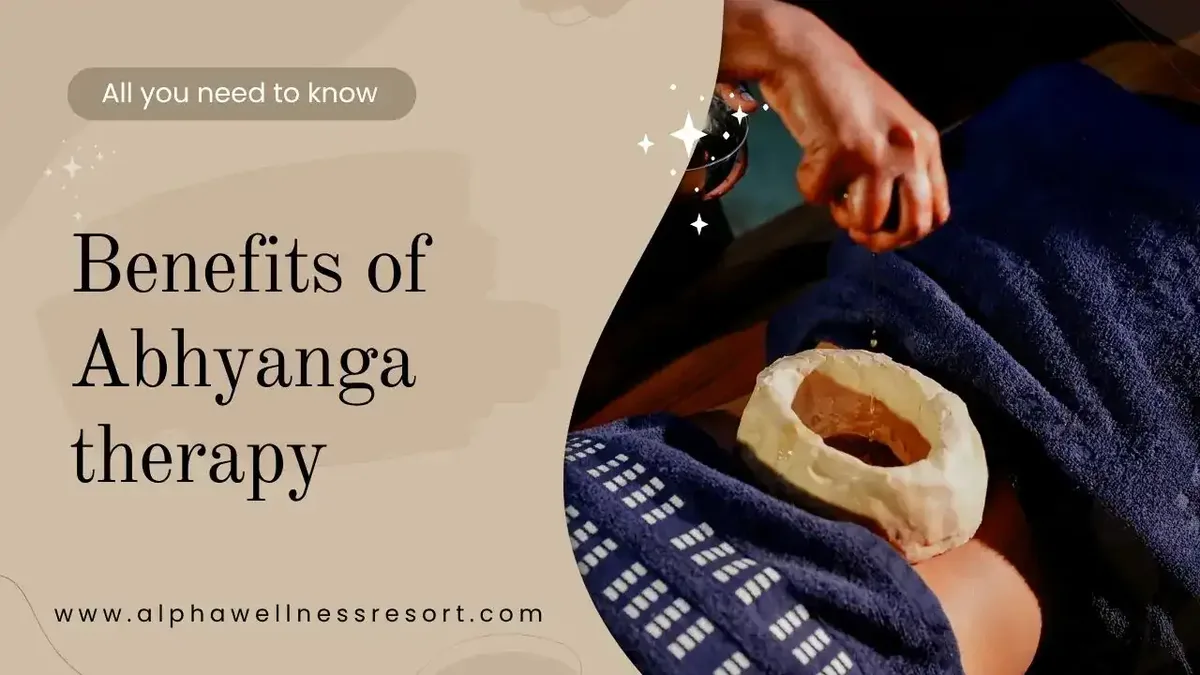
In Ayurveda, Abhyanga refers to a form of oil massage that is far more structured and therapeutic than a typical spa massage. It is a deliberate, technique-driven practice rooted in classical Ayurvedic texts and daily-routine science (Dinacharya).
Ayurveda classifies the body into three constitutional types, or doshas: Vata (governing movement and the nervous system), Pitta (governing metabolism and heat), and Kapha (governing structure and stability). Abhyanga’s oil choice, pressure, and pacing are all adjusted according to which dosha needs balancing.
Massage changes how you feel for a few hours. Abhyanga changes how your body behaves over time.
Mechanism of Action: What Abhyanga Actually Does to the Body
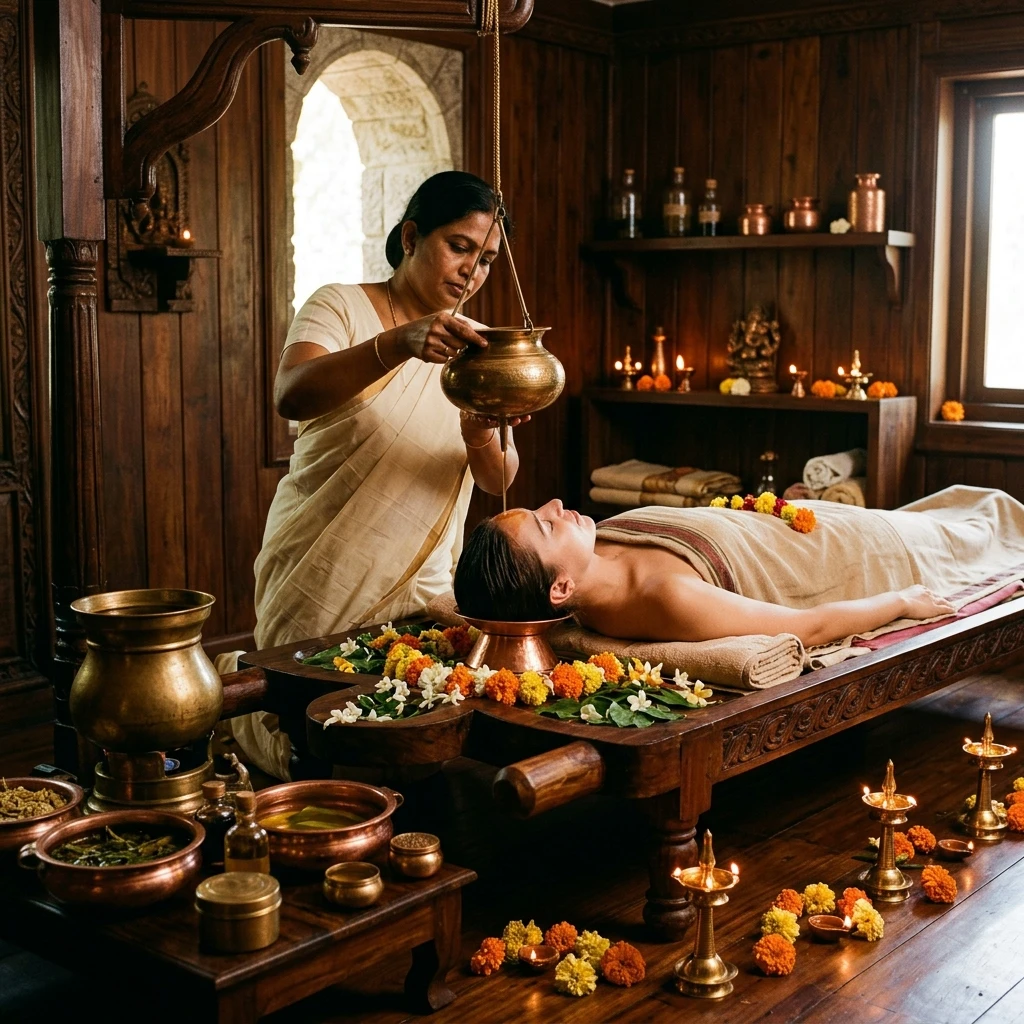
“Diagram showing how Abhyanga oil massage affects skin, fascia and the nervous system”
Abhyanga works through several physiological pathways:
1. Skin & Transepidermal Water Loss
Warm oil application reduces transepidermal water loss, helping the skin retain moisture and supporting the skin barrier.
2. Fascia & Connective Tissue
The specific stroke pattern used in Abhyanga — long strokes along the limbs, circular strokes over joints — is designed to work with fascia, the connective tissue network running throughout the body, rather than only targeting superficial muscle tension.
3. Nervous System & Vagal Tone
Slow, rhythmic, warm-oil strokes are associated with increased parasympathetic activity, often described in terms of vagal tone — the body’s “rest and digest” response. This is part of why Abhyanga is used therapeutically for stress and sleep support, not simply for relaxation in the moment.
4. Dhatus (Tissue Layers)
In Ayurvedic physiology, Abhyanga is believed to influence the dhatus — the seven tissue layers described in classical texts, from skin and blood through to reproductive tissue — supporting nourishment at a deeper level than the skin surface.
Oil Selection: Why It’s Not One-Size-Fits-All
Ayurveda pairs specific oils to specific constitutions:
- Vata constitution: Warm, heavy oils such as sesame oil, which help ground the dry, mobile qualities of Vata.
- Pitta constitution: Cooling oils such as coconut oil, which balance Pitta’s heat-generating qualities.
- Kapha constitution: Lighter, stimulating oils, sometimes infused with warming herbs, to counter Kapha’s heavy, stable qualities.
Beyond the base oils, herbal infusions are often added for targeted needs — for example, Bala oil for strength and tissue support, or Ashwagandha-infused oil for stress and nervous system support.
Technique: How Abhyanga Is Actually Performed
A professional Abhyanga session generally follows this sequence:
- Oil is warmed to a comfortable temperature.
- The scalp and ears are treated first — areas considered especially important in Ayurvedic physiology.
- Long strokes are used along the limbs, moving toward the heart.
- Circular strokes are used over joints, the abdomen, and the chest.
- The oil is left to absorb for a period before a warm-water bath.
How to Do Abhyanga at Home (Step-by-Step)
- Warm the oil. Gently warm your chosen oil (sesame, coconut, or a dosha-specific herbal oil) until comfortably warm, not hot.
- Start at the scalp and ears. Apply oil here first, using gentle circular strokes.
- Work toward the heart. Massage limbs with long strokes moving toward the heart; use circular motions over joints and the abdomen.
- Let the oil absorb. Leave it on for 10–15 minutes before bathing.
- Bathe with warm water. Rinse off with warm (not hot) water, using a mild, natural soap if needed.
For a fully guided version tailored to your constitution, our Panchakarma program includes Abhyanga as part of its preparatory phase — read our full guide on what Panchakarma involves.
Timing & Frequency
Classical Ayurvedic texts recommend Abhyanga as a daily morning practice, ideally before bathing. In a modern routine, however, doing it three to four times a week is a realistic and still meaningful frequency for most people, and is generally enough to sustain the nervous-system and skin benefits described above without requiring a strict daily ritual.
Clinical Indications: When Abhyanga Is Recommended
Abhyanga is commonly recommended for:
- Chronic stress and anxiety
- Sleep difficulties and disrupted rest
- Muscle stiffness and joint discomfort
- Dry skin and poor circulation
- As a preparatory therapy before Panchakarma
Book a Professional Abhyanga Session
Curious what a full, dosha-matched Abhyanga session feels like? WhatsApp our team to book a professional Abhyanga session at Alpha Wellness Resort, or ask about it as part of a full Panchakarma program.
Contraindications & Precautions
Abhyanga is generally safe, but caution is needed in specific situations:
- During acute fever or active infection
- Immediately after certain surgeries
- On broken or irritated skin
- During pregnancy, without guidance from both a doctor and an experienced Ayurvedic practitioner (technique and oil choice need to be adapted)
Why Abhyanga Matters for Modern Lifestyles
For people dealing with chronic stress, sedentary work, or poor sleep, Abhyanga offers a structured, non-pharmacological way to support the nervous system daily. It pairs well with programs like our Sleep Restoration and Rejuvenation offerings, where consistent bodywork is combined with diagnostics and lifestyle coaching.
Ready to Experience Abhyanga at Alpha Wellness Resort?
If reading this made you curious about how a personalized Abhyanga session feels, reach out on WhatsApp or explore our full Panchakarma programs, where Abhyanga is one of the foundational therapies.
Conclusion
Abhyanga is not about oil. It is about rhythm, consistency, and working with the body’s own systems — nervous, circulatory, and structural — rather than against them.
References
- Descriptions of transepidermal water loss and skin barrier function draw on general dermatological literature on emollient/oil-based skin therapies; readers can review the National Center for Complementary and Integrative Health’s overview of Ayurvedic medicine for background on the evidence base for Ayurvedic bodywork.
- Vagal tone and parasympathetic responses to massage-based therapies are discussed in the broader touch-therapy and integrative medicine literature; see the NCCIH resource above for a starting point on related research.
- Classical textual basis for Dinacharya and Abhyanga is drawn from the Charaka Samhita and Ashtanga Hridaya, foundational texts of Ayurvedic medicine.
Modern life has created a perfect storm for chronic disease—processed foods, sedentary habits, environmental toxins, and chronic stress. These factors...

Modern life has created a perfect storm for chronic disease—processed foods, sedentary habits, environmental toxins, and chronic stress. These factors...
Modern life has created a perfect storm for chronic disease—processed foods, sedentary habits, environmental toxins, and chronic stress. These factors...